The Cross-Reference That Crossed Nothing: Why 'Equivalent' Alloy Approvals Fail at the Spindle
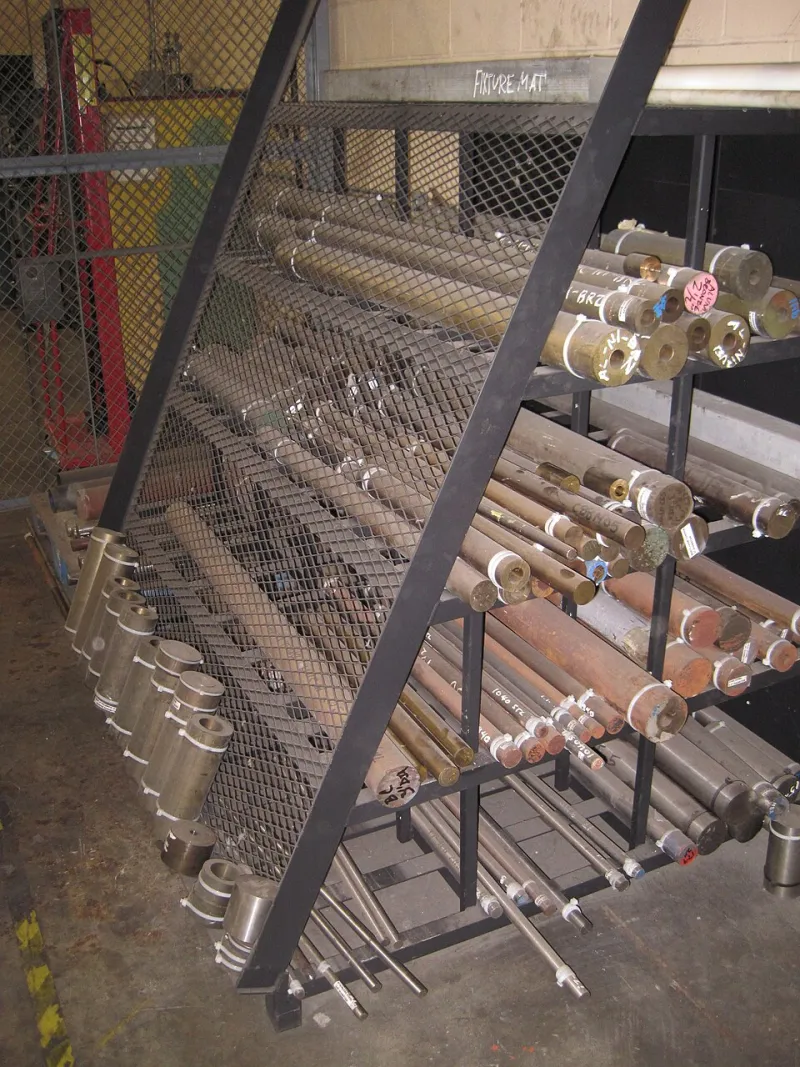
Photo: Alister 77, Public domain, via Wikimedia Commons
The request usually arrives as a courtesy. The mill is out of 304L in the bar diameter needed, the shop has 304 on the rack, the chemistries are close, and the delivery date is Thursday. Someone asks whether the substitution is acceptable. Someone else notes that the mill certificate lists both grades. The answer comes back quickly, because the answer is almost always yes.
Then the parts are machined, shipped, and installed, and eighteen months later a corrosion failure appears at a weld-adjacent surface that should never have been sensitized. Or a fastener that tested fine on the bench begins relaxing under preload because the temper condition was not what the drawing assumed. The substitution passed every document check it encountered. It failed at the spindle, where the material actually had to behave.
How a Substitution Enters the Program
Material substitutions rarely arrive as formal engineering change requests. They enter through a handful of ordinary channels:
- Mill cross-referencing. Distributors routinely list a single heat as conforming to multiple grades and specifications, and the certificate may show several UNS numbers in the same block.
- Availability pressure. A grade is quoted at fourteen weeks; a near neighbor is on the shelf. The purchasing agent, under schedule pressure, treats the neighbor as functionally identical.
- Legacy drawings. A drawing written decades ago calls out a specification that has since been superseded, and the shop substitutes the current revision without confirming that the revision is technically equivalent for the application.
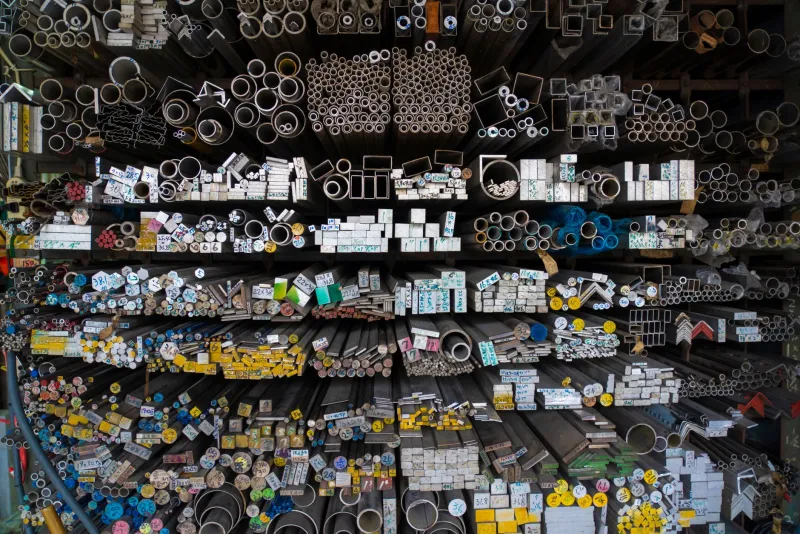
- Supplier-side standardization. A machine shop consolidates its bar stock to reduce setup and inventory, quietly converging several part numbers onto one alloy.
- Defense and specialty metals flow-downs. Domestic-melt requirements under DFARS can push a buyer toward a compliant but metallurgically different source.
Each of these is a reasonable decision in isolation. Collected together, they constitute an uncontrolled material change program that no one owns.
What UNS and ASTM Cross-References Do Not Tell You
A UNS number identifies a chemistry family. It does not certify a heat treatment, a mechanical property set, a grain structure, or a fabrication response. The gaps are consistent and well known to metallurgists and routinely invisible to procurement:
Carbon content within a family. 304 and 304L share a UNS family but differ in carbon limits, and that difference governs susceptibility to sensitization during welding and elevated-temperature service. A dual-certified heat is genuinely both; a heat certified only to the higher-carbon grade is not.
Temper and condition. 17-4 PH at H900 and at H1150 are the same alloy and wildly different materials — one strong and brittle, one tougher and less strong. A certificate naming the alloy without the condition is not an approval of the part.
Mechanical property minimums by product form. Bar, plate, and forging specifications for the same alloy impose different minimum yield and elongation values because the reduction ratios differ. A cross-reference from plate to bar can be metallurgically defensible and still fail a drawing that specifies the bar specification.
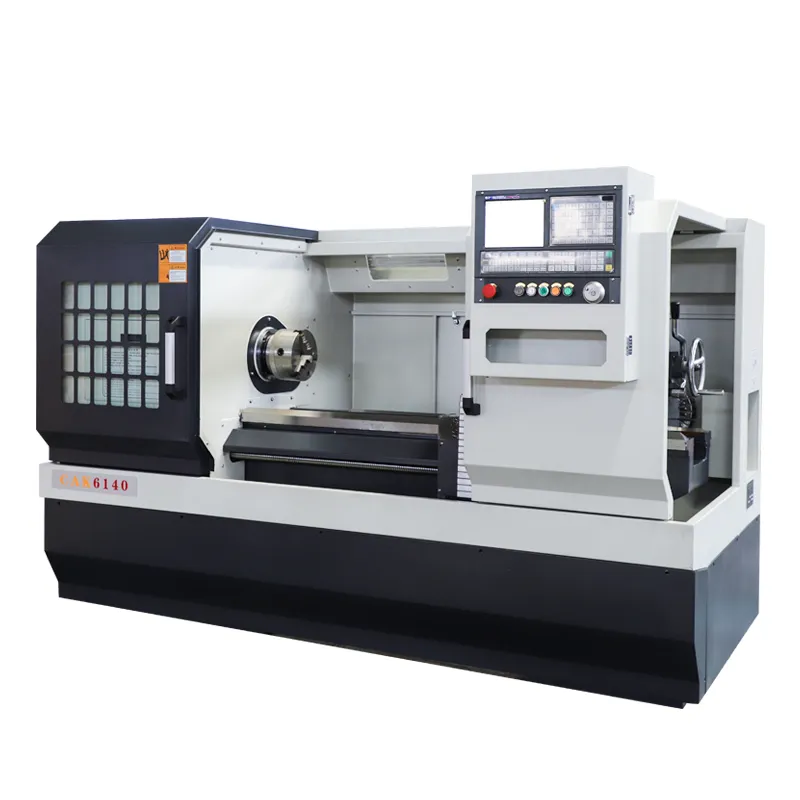
Machinability and residual stress. Free-machining grades such as 303 exist because sulfur or selenium additions change chip formation. Substituting 304 for 303 keeps the corrosion behavior roughly similar and can double cycle time, generate different residual stress patterns, and move a bore out of tolerance after the part relaxes.
Cleanliness and inclusion content. Aircraft-quality and bearing-quality grades carry melting practices and inclusion ratings that general-purpose grades do not. Two heats with identical chemistry can behave very differently in fatigue.
The Four Questions a Substitution Must Answer
Before any substitution is approved, four properties need to survive scrutiny — not one:
- Chemistry. Are the specified ranges for every element met, not just the headline alloying elements? Carbon, sulfur, and trace elements are where substitutions quietly fail.
- Mechanical properties. Do the actual certified values meet the drawing minimums in the form and condition supplied — tensile, yield, elongation, hardness, impact?
- Heat treat and process response. Can the substitute be heat treated, welded, plated, or passivated to the same result using the existing process specifications?
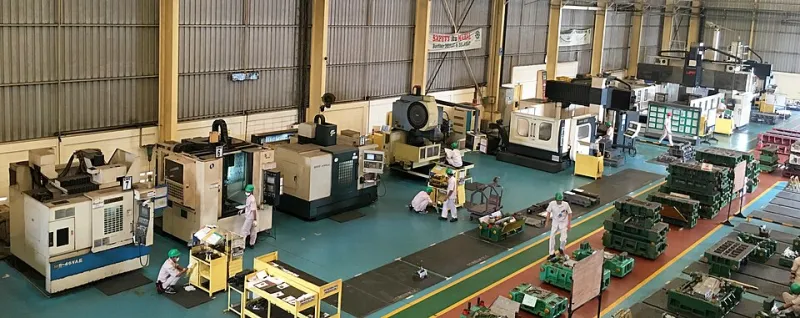
- Fabrication behavior. Does it machine, form, and finish in a way that keeps the process capable? A substitution that requires new tooling, slower parameters, or a different stress-relief sequence is a process change, not a material swap.
Building a Documented Approval Path
A workable substitution control has five elements, and none of them require new software:
A single entry point. All substitution requests route to one named function — typically manufacturing engineering or supplier quality — regardless of who raised them. Verbal approvals and email threads are not approvals.
A request form with the four questions on it. Chemistry, mechanical, heat treat response, fabrication impact, each with an attachment. If the answer is unknown, the request is incomplete.
A drawing and specification check. The reviewer confirms the drawing revision and every referenced specification, including finish and heat treat callouts that depend on alloy selection.
A customer flow-down check. Where the part is on a regulated program, the substitution may require customer approval before it is made — not after. Confirm this before cutting metal.
A delta qualification. Substituting material invalidates the first article. A new FAI on the first production lot of the substitute, or at minimum on the affected characteristics, is the cost of the change and should be quoted as such.
Finally, record the approval in the traveler itself. If the route sheet does not show which material was actually consumed and under what approval, the next auditor will reconstruct the story from shipping documents, and the reconstruction will be less flattering than the truth.
Cheap Until It Is Not
Substitution is a legitimate engineering tool. Supply interruptions are real, and a well-run approval path can keep a line running through a six-week mill delay. The distinction is between a substitution that was decided and one that merely happened.
The cost of the first is a form, a review, and occasionally a first article. The cost of the second is discovered at the point of failure, in a place and at a time that nobody chose.