The Shop Behind the Shop: When Your Machined Parts Are Made Somewhere You Never Approved
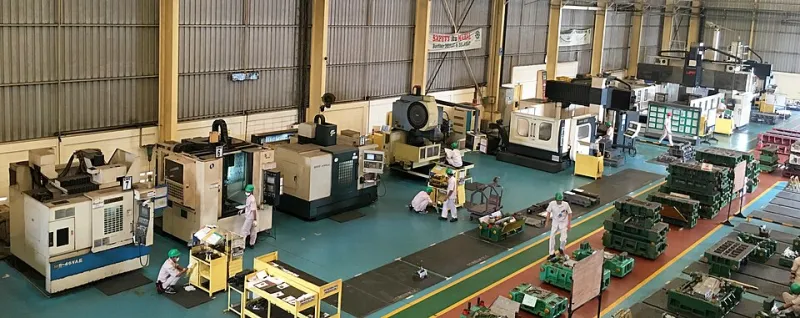
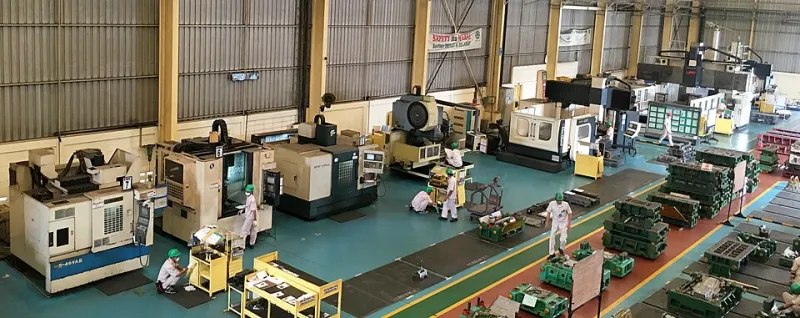
Photo: Antoniusaw, CC BY-SA 4.0, via Wikimedia Commons
Every purchase order for precision machined components carries an implied promise: the shop you qualified is the shop that makes your parts. In practice, that promise breaks more often than most procurement teams realize. When a machine shop's spindle hours fill up, the path of least resistance is rarely to decline the work. It is to broker it — quietly — to an overflow partner whose equipment, quality system, and machinists you have never evaluated.
This is not always malpractice. Capacity sharing is a legitimate and often necessary feature of the manufacturing economy. The problem is disclosure. A buyer who does not know where their parts are actually being made cannot manage the risks that come with them: dimensional consistency across vendors, traceability of materials and certifications, and the enforceability of quality agreements.
Why Undisclosed Subcontracting Happens
The economics are straightforward. A shop that quoted your job at a healthy margin has already committed the delivery date. Turning away the order means idle overhead; brokering it means the revenue stays while someone else's machines absorb the load. Some shops maintain formal, vetted subcontractor networks and disclose them. Others treat overflow as a private solution to a private problem — one the customer is not expected to know about.
The asymmetry matters because the qualification you performed applied to the vendor, not to the vendor's vendor. Your supplier survey, your AS9100 or ISO 9001 review, your first article inspection — all of it was conducted at a facility that may not have touched your parts at all.
What Is Actually at Risk
Tolerance and process capability. A partner shop may run different machine tools, different fixturing, and different inspection equipment. A ±0.0005 in. bore that the primary shop holds comfortably on a particular CNC lathe may be a struggle on unfamiliar equipment. Process capability does not transfer with the purchase order.
Traceability and certifications. Material test reports, certificates of conformance, and lot traceability documentation are only as credible as the weakest hand in the chain. If material was purchased by the primary shop but machined elsewhere, the paperwork trail can become murky — particularly for aerospace, medical, or defense work governed by DFARS or ITAR requirements. Subcontracting controlled work to a non-registered facility is not merely a quality problem; it can be a compliance violation.
Accountability. When a nonconformance surfaces, the primary shop owns the relationship but not the process. Root cause analysis becomes a negotiation between two companies, neither of which is fully transparent to you.
Questions That Surface the Truth
Procurement teams can cut through the ambiguity with direct, contractually meaningful questions:
- Will any portion of this order be machined at a facility other than the one named on the quote? Ask for the answer in writing, per line item.
- What is your subcontracting policy for overflow capacity? A mature shop has a written one and will share it.
- Are your subcontractors on an approved supplier list, and how are they audited? Ask for audit cadence and scope.
- Will you provide disclosure of any subcontracted operations — including heat treat, plating, and secondary machining — before shipment?
- For regulated work: are all subcontractors ITAR-registered, DFARS-compliant, or otherwise qualified under the applicable flow-down requirements?
The quality of the answers tells you as much as the content. A shop that answers fluently has probably thought about this. A shop that stalls, hedges, or reframes the question is telling you something else entirely.
Writing RFQ Language That Holds
Disclosure obligations should live in the RFQ and carry into the purchase order. Effective language is specific rather than aspirational:
- Require written identification of any subcontracted manufacturing operations before the order is accepted.
- Reserve the right to approve or reject named subcontractors for the work in question.
- Require that flow-down requirements — quality system standards, traceability, export control, and inspection obligations — extend to all subcontracted operations.
- Specify that first article inspections must be performed at the facility where production will occur.
- State that undisclosed subcontracting constitutes grounds for rejection of the shipment and requalification of the supplier.
None of this prevents a shop from using partners. It simply ensures that the decision is made with the buyer's knowledge, before metal is cut rather than after a nonconformance report lands.
The Fair Version of the Deal
Vendors sometimes worry that disclosure language signals distrust. The opposite is true. Shops that maintain disciplined subcontractor networks should want to talk about them — it is a capability, not a confession. A partner who can extend capacity through qualified, audited resources is arguably more resilient than one who cannot.
What procurement should refuse to accept is silence. The second shift your parts never see should not exist. If the work moves, you should know where, by whom, and under what controls — before the quote becomes a purchase order, not after it becomes a problem.