The Margin Comes Back Somewhere: Anatomy of a Below-Cost Machining Bid
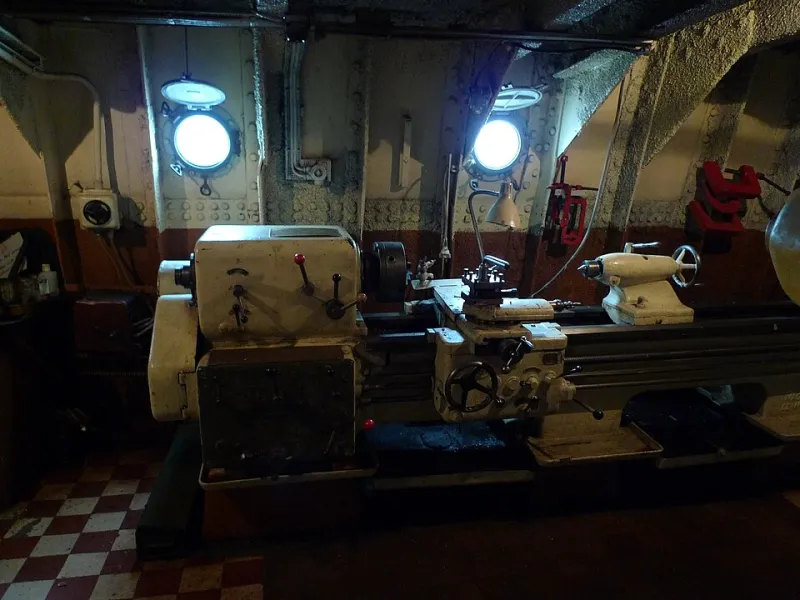
Photo: ezioman, CC BY 2.0, via Wikimedia Commons
Every procurement team has seen it. Ten quotes for a multi-year machining package, nine of them clustered within a reasonable band — and one sitting 18 or 25 percent below the pack, clean certifications, fast delivery promise, polished presentation. The temptation is obvious. The budget office is happy, the award memo writes itself, and the sourcing rationale practically composes its own justifications.
Then the engineering change orders start arriving. Expediting fees appear on invoices nobody approved. The shop 'discovers' a fixture requirement that adds $4,200 to the first lot. By month fourteen, your program has paid back every dollar you 'saved' — plus interest, in the form of schedule risk you never budgeted for.
This is not incompetence. It is strategy. And in the US precision machining sector, it has a name: buying the contract.
Why a Shop Bids Below Its Own Cost
The logic is straightforward. A capacity-constrained shop with a half-empty 5-axis cell needs anchor work — a multi-year program that fills machines, justifies headcount, and keeps the bank comfortable. Winning that anchor at a loss is an investment. The recovery comes later, through three reliable channels:
Engineering and NRE charges. Programs, fixtures, and first-article work get quoted 'at cost' up front, then re-billed when the drawing evolves — and drawings always evolve.
Expediting and split-lot fees. Once your part is on their floor, urgency has a price. A shop that underbid the base price can quietly make margin on every 'rush' you request.
Scope creep on change orders. The quote covered the print. The revisions, the added inspections, the re-qualification after a material substitution — all billable, all priced with a healthy margin because you have nowhere else to go mid-program.
None of this is visible on the quote sheet. All of it is predictable if you know where to look.
What a Realistic Cost Baseline Looks Like
You cannot spot a loss leader without a sense of what the work should cost. You don't need to become a cost accountant; you need ballparks for the common cases.
For 6061-T6 aluminum on a 3-axis mill, modest tolerances, lot sizes in the hundreds, a defensible machine rate in the US Midwest runs roughly $65–$95 per hour. Titanium and Inconel work pushes that materially — longer cycle times, aggressive tooling consumption, slower feeds — and quotes that ignore the tooling line item are telling you something. A shop quoting titanium parts at aluminum economics is either wrong or planning to be.
Two sanity checks work better than any spreadsheet:
The raw material floor. Price the stock yourself from a distributor. If a quote lands within 15% of material cost alone, the shop is pricing labor at zero. That is not efficiency; that is a promissory note.
The spread test. In a competitive field of qualified bidders, quotes should cluster. When one bid sits far below the median, ask why — and treat 'they must have better processes' as a hypothesis to verify, not an answer to accept.
Questions That Surface the Strategy Early
During source selection, ask every finalist the same three questions and compare answers:
-
Walk me through your cost build-up for this part. A shop confident in its number will discuss setup time, cycle time, and tooling life without flinching. A shop buying the contract will get vague.
-
What happens to this price if the drawing changes by two dimensions? You're listening for a defined change-order rate structure, not improvisation.
-
What is your expediting policy — in writing? Shops that plan capacity honestly have a policy. Shops that plan to charge for urgency later don't want to discuss it now.
A fourth signal worth weighing: how the shop treats your RFQ package. A bidder who read the drawing carefully enough to ask about the tolerance stack on the bore is a bidder who priced the real job. A bidder who returned a quote in four hours without a single clarifying question priced the job they wanted it to be.
Writing Contracts That Survive Year Three
Detection at award is only half the job. The other half is structuring the agreement so the recovery channels close:
-
Fix change-order rates at signing. A published rate card for engineering time, programming, and fixture work removes the margin playground.
-
Cap or eliminate expedite fees where the schedule slip originates on the vendor's side, and define 'rush' objectively — by hours, not by mood.
-
Tie price adjustments to an index, not to renegotiation. Material surcharges tied to a published index (aluminum LME, steel indices) are legitimate. Open-ended 'cost reconciliation' is a blank check.
-
Include a price-down clause on volume commitments. If you guaranteed volume, some of that leverage belongs to you as the learning curve flattens.
-
Require open-book review at defined milestones. For multi-year programs, an annual cost review — with the vendor's markup protected — is standard practice among sophisticated OEMs and it keeps both sides honest.
A Closing Word From the Floor
We will be direct, because we sit on the quoting side of this industry: a shop that prices a program to win it at any cost is making a bet, and bets sometimes get settled on your delivery schedule. The best vendors lose some bids because they priced the actual work. That stings in the quarter; it protects the program for years.
The lowest quote is data. It is not a decision. Read it the way you'd read any number that looks too good — as a question that deserves an answer before your signature supplies it.