Batch Forty-Seven Is the Real Audit: How to Judge a Machining Partner When the Applause Is Over
Photo: Prbocchi, CC BY-SA 3.0, via Wikimedia Commons
Every procurement team has seen the flawless first-article package: dimensional reports, CMM scatter plots, a part so clean it belongs in a display case. It is easy to walk away from that review convinced the vendor selection is complete. It isn't. The first article answers one narrow question — can this shop be excellent on demand, once, with full attention? The question that actually determines your program's fate is whether that shop can be excellent on a Tuesday afternoon in month eleven, when the engineer who programmed the job has moved on and the order is one of forty on the floor.
The Fallacy of the Perfect Sample
First-article parts are produced under the best conditions a shop can manufacture: senior machinists, fresh tooling, generous setup time, and usually an audience. None of those conditions survive contact with volume production. What replaces them is the shop's actual infrastructure — its tool-change intervals, its revision control, its institutional memory. If that infrastructure is thin, part number two is where the drift begins, and by part four hundred the drift has a name, a cost, and a返工 queue.
This is why repeatability is a harder engineering problem than accuracy. A single precise part demonstrates capability. A thousand precise parts demonstrate control — and control is a management discipline, not a machine specification.
Where Consistency Actually Lives
When we evaluate repeat-order performance at Hongye Precision, we look at three areas that rarely appear on a capability slide.
Tooling wear plans. Every cutting tool degrades, and degradation follows a predictable curve. A disciplined shop documents expected tool life per operation, schedules replacement at 80% of proven life rather than at failure, and logs deviations. A shop that runs tools to failure is betting your tolerance stack on luck. Ask a prospective vendor: at what point in tool life do you replace end mills on this feature, and can you show me the log?
Process documentation that survives turnover. The setup sheet, workholding plan, and program revision history should be complete enough that a machinist who has never seen the part can run it correctly. If the process lives in one person's head, your production schedule lives in that person's two-week notice. Documentation discipline is the difference between a shop and a sole proprietor with a payroll.
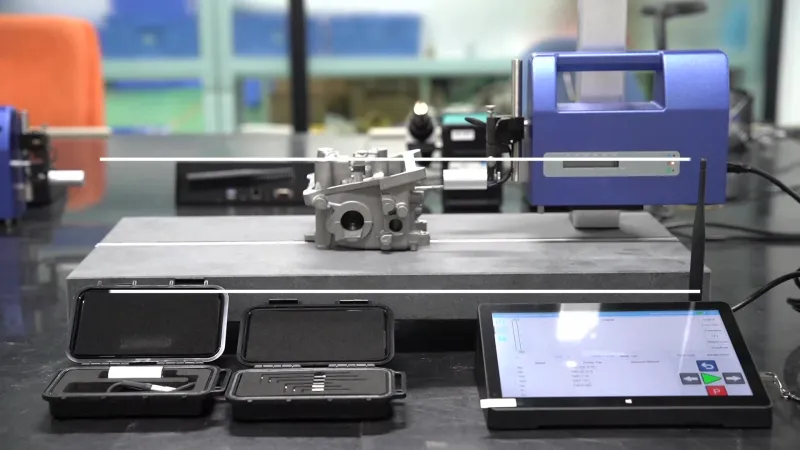
Measurement continuity. Gauges wear, calibrate drift, and get dropped. A serious shop maintains a calibration schedule and, critically, performs periodic correlation checks between shop-floor gauges and the CMM that approved your first article. Without correlation, batch fifty can be measured into compliance by an instrument that no longer agrees with the one that qualified the job.
Writing Contracts That Reward the Boring Win
Standard purchase agreements are structured around the heroic event: on-time delivery of the first lot, penalty clauses for the catastrophic miss. They say almost nothing about the quiet middle ground where most value is won or lost. Consider three additions:
- Cpk reporting on critical dimensions at defined intervals, not just at FAI, so drift becomes visible before it becomes scrap.
- Change-notification clauses requiring the vendor to flag tooling substitutions, program revisions, or secondary-source changes before they ship, not after.
- Consistency metrics in scorecards — lot acceptance rate over trailing twelve months, not average quality — so a single perfect lot cannot mask a deteriorating trend.
Vendors who resist these terms are telling you something worth hearing before renewal season.
A Repeat-Order Audit Checklist
Before renewing a multi-year machining agreement, pull the record and ask:
- What is the lot acceptance rate across all shipments, not the most recent one?
- Have critical dimensions shown a trend — even one still within tolerance — across the production history?
- Has the same setup documentation been in force since the first article, or has it quietly mutated?
- Were any tooling, workholding, or program changes communicated and re-qualified, or discovered in the packing slip?
- Could the shop re-run this job tomorrow if the original programmer and machinist were unavailable?
- Do incoming inspection results at your facility correlate with the vendor's outgoing results, or has a measurement gap opened?
Any single 'no' is a conversation. Three or more is a decision point.
The Unromantic Advantage
There is nothing dramatic about a shop that produces batch forty-seven to the same standard as batch one. No one writes case studies about uneventful repeat orders. But in precision machining, the uneventful is the achievement. The best vendors are not the ones who can impress you once under supervision — they are the ones whose systems make excellence boring, repeatable, and independent of who happens to be standing at the machine. Procurement teams who learn to buy that, rather than a highlight reel, spend a lot less of their careers explaining shortages to production planning.