The Cheapest Year Is the Year Nothing Changed: An Honest Audit of the Annual Requote Ritual

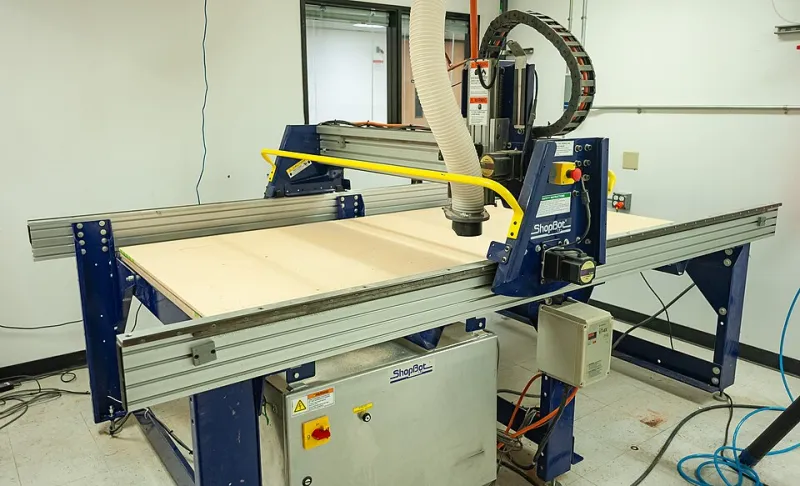
Photo: doe-oakridge, Public domain, via Wikimedia Commons
Every manufacturing organization of any size has a version of the same meeting. It happens in the fall, when next year's targets are being set, and someone from procurement presents a slide titled Supplier Consolidation and Cost Savings Initiatives. On that slide is a percentage — usually somewhere between five and twelve — representing the savings expected from re-bidding machined components that are already in stable production.
The percentage is real in the sense that the new quotes will, in fact, come in lower than last year's prices. What the slide does not show is everything that happens between the award letter and the first good shipment. In precision machining, that gap is where the savings go to die.
What the Requote Actually Costs
A machined component in stable production is not just a part number with a price. It is a validated process: proven fixturing, dialed-in cutting parameters, an inspection routine that catches the specific failure modes that part tends to exhibit, and machinists who know which end of the tolerance band the customer's assembly line prefers.
When the work moves to a new shop — even a fully capable one — that validation resets to zero. The honest ledger for a typical re-sourcing event looks like this:
- First-article inspection and requalification. New FAI, new PPAP or equivalent documentation, new capability studies. On a moderately complex part, this is weeks of engineering time on both sides.
- New fixturing. The incumbent's fixtures are proprietary to their process. The new vendor builds their own, and that cost is either quoted explicitly or buried in the piece price. Either way, you pay for it.
- Learning-curve scrap and rework. The first several lots from a new source run at higher defect rates. This is not a criticism of the vendor; it is physics and statistics. Even with a good process, the early lots expose the part's sensitivities.
- Schedule risk. During transition, dual-source overlap, expedited freight, and buffer stock all carry cost. None of it appears on the savings slide.
- Internal labor. Quality engineering, supplier development, and program management hours spent re-qualifying a part nobody changed.
Run a realistic model on a mid-volume aluminum or stainless component — say, 10,000 pieces a year with a $28 piece price — and a 7% quoted savings looks like $19,600 annually. A conservative requalification bill (fixtures, FAI, transition scrap, expedite coverage, internal hours) frequently lands between $30,000 and $60,000. The savings sprint is underwater before the second quarter begins, and the break-even point typically arrives in year three — assuming nothing else goes wrong.
The Incentive Problem Nobody Puts on the Slide
It would be convenient to blame procurement, but the root cause is structural. A buyer's measurable achievement is a documented cost reduction; a buyer's unmeasurable achievement is a supply disruption that never happened. Annual re-bidding exists partly because savings are easy to book and stability is not.
The result is a peculiar dynamic well known to every machine shop in the Midwest and Southeast: parts get re-bid every cycle, prices compress, and quality systems quietly stretch to meet the new economics. The margin comes back somewhere — in inspection sampling that gets thinner, in second-tier raw material sources, in the senior machinist who isn't replaced when he retires. The buyer's spreadsheet shows the savings. The plant shows the consequences a year later.
When Re-Sourcing Genuinely Makes Sense
This is not an argument that incumbent vendors should never be challenged. It is an argument that the decision should be made with the full cost picture, and that there are clear conditions under which re-sourcing is the right call:
- The incumbent's pricing is genuinely misaligned with market benchmarks — not just with an arbitrary annual reduction target.
- Quality or delivery performance has deteriorated and corrective action has failed. A vendor who cannot hold spec at the current price is not offering a saving; they are offering a liability.
- The incumbent's business has changed — ownership transfer, loss of key staff, deferred capital equipment purchases. This is due diligence, not disloyalty.
- The part has changed — new volumes, new materials, or design revisions that a different process or machine platform could serve better.
- The total cost model favors the challenger, including requalification, transition risk, and logistics — not just the piece price.
Notice what is absent from that list: the fiscal calendar. A savings target is not a reason to move a validated part. It is a reason to have a conversation with your current vendor, who — if they are worth keeping — would rather sharpen their pencil than lose the work and relearn it in two years.
A Better Instrument: The Structured Value Review
For precision components, we suggest replacing the annual re-bid with an annual value review: a joint session where the incumbent presents cost breakdowns, process improvements, and capability data, and the customer presents volume forecasts and honest performance feedback. Suppliers who know they are being evaluated on total value — and who can see a multi-year horizon — will invest in the fixturing, the staff, and the process controls that stable production deserves.
The cheapest year for a precision part is almost always the year nothing changed: same vendor, same proven process, same fixtures, same inspection routine. Stability is not the absence of procurement rigor. Done right, it is its highest form — and the savings you book in that year are the only ones that don't come with an invoice attached.