Clamped and Committed: What a Vendor's Fixturing Strategy Reveals Before You Sign
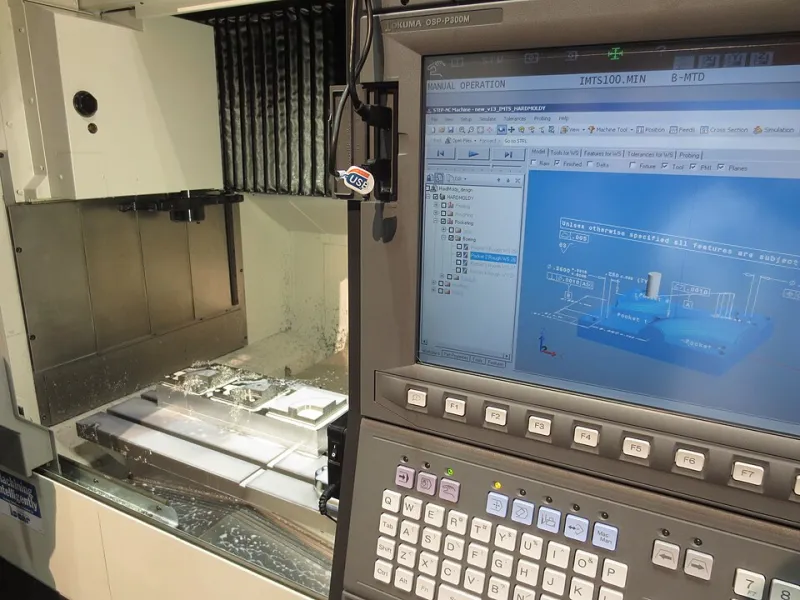
Photo: Loffredo, CC BY-SA 4.0, via Wikimedia Commons
The Variable Nobody Quotes
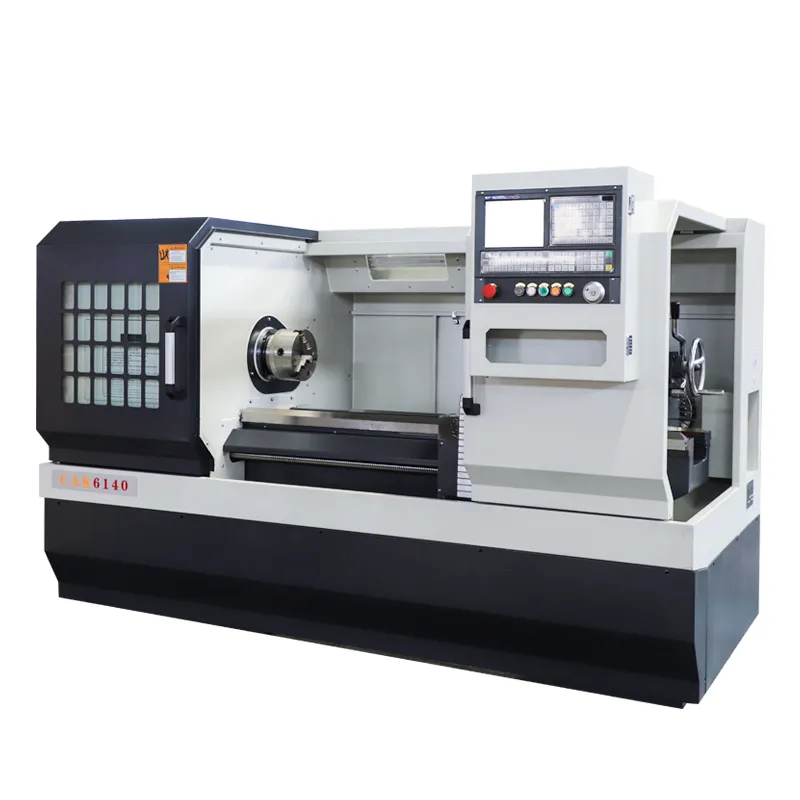
Ask a machine shop about its capabilities and you will get a recitation of equipment: five-axis mills, Swiss lathes, CMM capacities. What you will rarely hear about is the fixture — the clamps, vises, collets, and custom tooling that physically hold your part while the cutting happens. That silence is telling, because in precision machining the workholding often matters more than the machine tool itself.
A $750,000 machining center producing from a poorly conceived fixture will deliver drift, distortion, and inconsistent datum relationships. A modest, well-maintained mill running from a thoughtfully engineered fixture can hold critical dimensions across an entire production run. For procurement teams evaluating vendors, fixturing strategy is one of the most predictive — and most overlooked — signals available.
Why the Fixture Outranks the Machine
Every machined part is a negotiation between cutting forces and clamping forces. The fixture determines where the part deflects, which surfaces see residual stress, and how repeatably the part returns to the same position run after run. Consider what the workholding actually controls:
- Datum fidelity. Your drawing's datums only matter if the fixture references them. A fixture built around convenient surfaces rather than functional datums bakes error into every cycle.
- Clamp-induced distortion. Thin-walled housings, ring forgings, and machined-from-solid aerospace brackets all deform under clamping pressure. A shop that has not engineered around this will ship parts that measure in-spec while clamped and out-of-spec when released.
- Setup repeatability. Modular workholding with documented zero-points can be torn down and rebuilt within tenths. Ad-hoc clamping cannot. When your job goes to the back of the queue and returns three weeks later, the fixture decides whether it comes back right.
In short, the fixture is where a shop's engineering judgment lives. Machines can be bought; fixture design discipline has to be built.
Dedicated vs. Modular: A Question With a Budget Attached
One of the most useful questions to put to a prospective vendor is straightforward: for this part, would you build a dedicated fixture or use modular workholding, and why?
Neither answer is automatically correct. Dedicated fixtures make sense for higher-volume programs, complex geometries, or parts with tight positional callouts between machined features — the amortized tooling cost buys repeatability. Modular systems (such as zero-point palletized setups) make sense for prototypes, low-volume work, and job shops juggling frequent changeovers.
What should concern you is a vendor who cannot articulate the trade-off. A shop that defaults to general-purpose vises for everything is telling you that setup time, not part quality, drives their process decisions. A shop that proposes a dedicated fixture for a 50-piece prototype run may be padding your quote with tooling you do not need. The right answer is contextual — and a competent supplier should be able to defend theirs with a cost and risk rationale.
Five Questions That Expose Workholding Discipline
Before award, fold these into your supplier evaluation, ideally during a call with the manufacturing engineer who will own your job — not just the salesperson:
- Which datums does your proposed fixture reference, and how? The answer should mirror your drawing, not the shop's convenience.
- How will you manage clamping distortion on this geometry? Look for mentions of reduced clamping pressure, support systems, torque specifications, or sacrificial tabs on thin sections.
- What is your setup documentation standard? Photos, fixture drawings, torque values, and tool offsets should be archived so a setup can be reproduced exactly — months or years later.
- Who designs the fixture, and who signs off on it? Fixture design done by the operator between cycles is different from design reviewed by a manufacturing engineer against the drawing.
- Can I see the first-article setup plan? First-piece strategy — how the shop proves out the fixture before committing to the run — reveals more about process maturity than any certification binder.
Reading the First-Piece Strategy
How a shop approaches the first article on a new fixture is a remarkably honest window into its culture. A disciplined process treats the first piece as a fixture qualification event: the part is measured not just against tolerances but against datum alignment, and the setup is documented as approved before production continues. A loose process treats the first piece as a trial cut — run it, measure it, adjust, repeat — which works fine until the eighth setup, when undocumented adjustments compound and consistency quietly erodes.
If your program involves multiple deliveries over multiple years, this distinction is not academic. The fixture that produced your approved first article is, functionally, part of your quality agreement. If it is later rebuilt from memory rather than documentation, your parts will change even if your drawing never did.
Put It in the Contract
For multi-year or high-criticality programs, consider making fixturing explicit in your purchase terms: fixture ownership (yours or the supplier's), documentation retention, a change-notification requirement before any workholding modification, and — where volumes justify it — a second fixture or duplicate soft jaws maintained for business continuity. None of this is adversarial. It simply acknowledges what every experienced manufacturing engineer already knows: the machine gets the credit, but the fixture decides the outcome.
When you evaluate your next machining supplier, spend less time on the equipment list and more time on how they intend to hold your part. The answer will tell you more about your future scrap rate than any brochure can.