The Dormant Vendor: Why Your Qualified Backup May Already Be Useless

Photo by Photo by Peter Herrmann on Unsplash on Unsplash
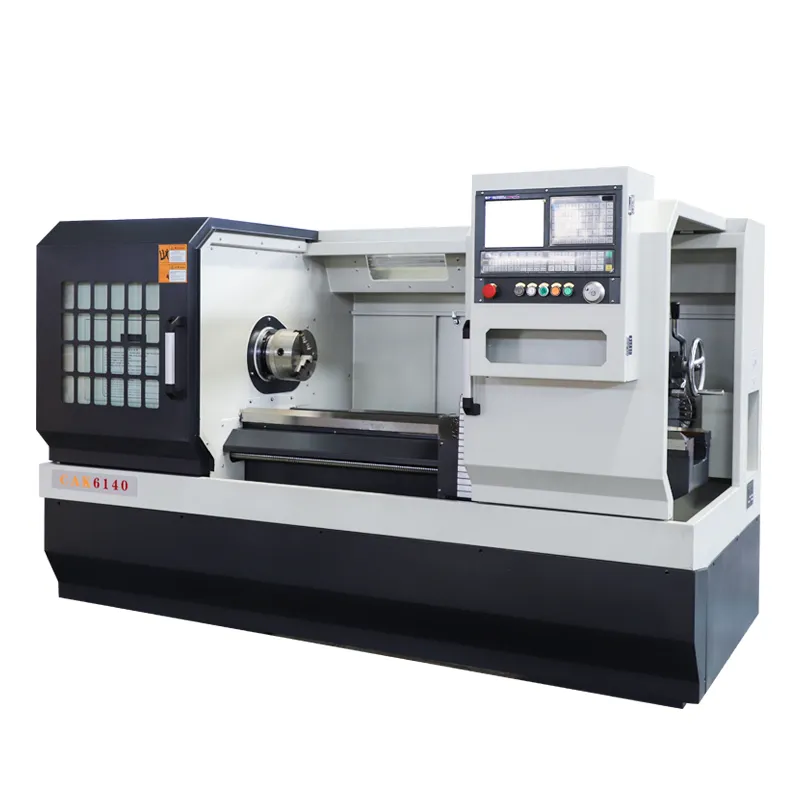
Most procurement teams in the US industrial sector can point to a folder somewhere containing a qualified second source for their critical machined components. The FAI was completed, the PPAP was signed off, the vendor was entered into the approved supplier list. And then, in the majority of cases, nothing happened. The backup source received zero purchase orders, zero engineering updates, and zero attention — sometimes for years.
This is what we call the dormant vendor problem, and it's a risk disguised as a mitigation strategy.
A Qualification Is a Snapshot, Not a State
Machining capability is not a certificate on a wall. It's a living condition that depends on the people, machines, and tooling currently inside a shop. A vendor who delivered a flawless first article eighteen months ago may have since reassigned the programmer who owned your part, sold the five-axis that held your tolerances, or absorbed a larger customer whose volumes pushed your work to the bottom of the queue.
None of this shows up in your supplier database. The vendor remains "qualified" on paper while quietly drifting out of a position to actually support you. When the primary source fails — a fire, a bankruptcy, a quality escape, a capacity crunch — the emergency activation of a dormant backup routinely takes eight to sixteen weeks. That's not a second source. That's a second problem.
The Real Cost of a Line-Down Event
Run the arithmetic on a typical scenario. A Tier 2 automotive supplier in the Midwest loses its primary machining source on a high-runner component. The customer line consumes parts at a fixed rate; the OEM's chargeback for a line stop runs into five figures per hour under many supply agreements. Expedited freight, premium pricing on emergency capacity, engineering overtime to re-fixture the part at a new vendor, and the reputational cost of the escalation call all stack on top.
Against that, the cost of keeping a second source warm is almost comically modest: a periodic first article on current-revision geometry, an annual capability review, and — for parts with significant setup content — a small annual order that keeps tooling, programs, and process knowledge current. For most components, that's a rounding error in the annual spend.
Keeping a Backup Actually Ready
A genuinely production-ready second source requires deliberate maintenance. The core practices:
- Annual or semi-annual first articles. Run the part at the backup vendor on the current revision, with current material lot specifications. This verifies the process, not the memory of one.
- Shared or duplicated tooling. For parts with custom fixtures or special-form tools, decide explicitly whether the backup holds its own tooling or a documented transfer plan exists. Ambiguity here is where weeks disappear.
- Program and drawing currency. Every engineering change order should flow to both sources simultaneously. A backup machining to Rev D when you're shipping Rev F is a latent defect factory.
- A small but real order history. Even a modest annual quantity keeps the vendor's quoting, scheduling, and quality systems familiar with your part — and keeps you visible in their capacity planning.
- Named contacts and escalation paths. Know exactly who at the backup shop would pick up the phone at 2 a.m., and confirm they still work there.
The Annual Backup Vendor Audit: A Checklist
Once a year, audit every dormant second source against this list:
- Has the vendor produced your part (or a comparable part with the same features) in the last twelve months?
- Are the CNC programs, fixtures, and inspection plans on file current with the latest released revision?
- Have there been changes in ownership, key personnel, or equipment at the vendor since the last review?
- Can the vendor confirm raw material lead times for your specified alloys today, not theoretically?
- Does the vendor's current capacity plan have realistic room for an emergency ramp of your volumes?
- Is the FAI data less than two years old, and was it performed on the machine that would run production?
Any "no" or "unknown" is a gap between the qualification you think you have and the one you actually have.
An Uncomfortable Question Worth Asking
The honest test is simple: if your primary source went dark tomorrow morning, how many days of finished-goods inventory stand between you and the escalation call — and how confident are you, really, in the number attached to your backup vendor's name in the ERP?
If the answer is a feeling rather than a documented date, the second source is a line item, not a strategy. The shops that survive supply disruptions aren't the ones with the longest approved vendor lists. They're the ones whose backups have made the part recently enough to prove it.