Fifty Parts Later: What Production Volumes Expose About a Machine Shop
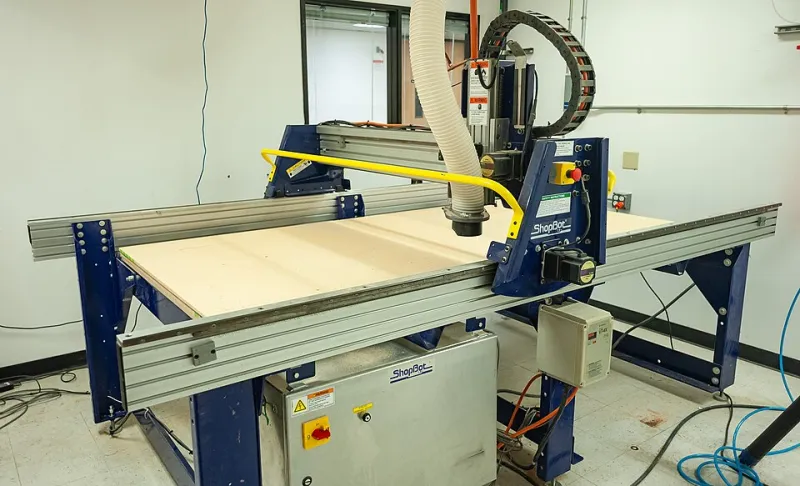
Photo: Rickwashburn1, CC BY-SA 4.0, via Wikimedia Commons
Every machine shop in America can make one beautiful part. That is not a criticism — it is simply how the economics of prototyping work. A single unit gets the senior machinist, the fresh tooling, the uninterrupted afternoon. The customer's inspection report comes back clean, the purchase order for production quantities follows, and only then does the relationship encounter its real test.
The gap between what a vendor demonstrates at first-article and what it sustains at article fifty is one of the most reliable predictors of supply chain trouble, and yet almost no procurement process measures it directly. Here is how to close that gap.
Why the Prototype Lies (Politely)
A prototype run is an audition. The shop knows it, and it staffs accordingly. Setup is done by the most experienced hand available, cutting parameters are tuned conservatively, and in-process inspection happens far more often than the control plan strictly requires. None of this is deceptive — it is rational. But it means the buyer is evaluating a version of the shop that will not exist during production.
Once volumes ramp, three things change at once. First, cycle time pressure replaces perfection pressure. Second, the work migrates from the audition crew to the regular shift rotation. Third, tooling wears, and the question becomes whether the shop's wear compensation and inspection cadence catch drift before the customer does. A shop's genuine capability is defined entirely by how it handles those three shifts — and none of them are visible in a first-article report.
Measuring the Drift: First Article vs. Fiftieth Article
The most practical diagnostic a buyer can run is a comparison study. Request dimensional data — actual measured values, not pass/fail checkmarks — from the first article and from a random sample pulled from a mid-run lot. Then compare, feature by feature.
What you are looking for is not out-of-spec conditions. You are looking for migration. If a bore that measured 0.4998 inches on the first article consistently measures 0.5003 by mid-run, the parts still pass, but the process has drifted toward a control limit. That migration tells you something important: the shop is riding its tolerances rather than centering them. Today it passes. On a tighter drawing, or with a new material lot, it scrapes.
Specific signals worth tracking across lots:
- Mean shift — the average dimension moving away from nominal, which suggests tool wear compensation is manual rather than systematic.
- Spread widening — standard deviation growing lot over lot, which points to fixture repeatability or operator technique variation.
- Cpk decay — a capable process at launch that degrades to marginal by the third lot, indicating the shop ran a capability study once and filed it.
Any shop worth a multi-year agreement should be able to produce this data on request. A shop that cannot, or that offers only inspection reports showing "OK," is asking you to fund the experiment yourself.
The Handoff Problem Nobody Quotes For
Most quality escapes in production machining trace back not to machines or programs but to people changing. The day-shift setup technician who ran the first article retires, transfers, or simply goes home at 3:00 PM. The evening crew inherits a setup sheet that says less than it should, and tribal knowledge — the reason that one fixture bolt gets torqued in a particular order — walks out the door.
During supplier evaluation, ask directly how a job survives a shift change. Strong shops have answers that are structural, not personal: setup sheets with photographs, documented tool offset baselines, first-piece verification at every shift start, and a designated process owner who owns the job across all crews. Weak shops answer with names. "Bob has run that part for years" is a compliment to Bob and a red flag for your purchase order.
Contractual Levers That Actually Work
Buyers are not helpless here. Several provisions, routinely negotiated, convert repeat-run consistency from a hope into an obligation:
- Ongoing Cpk requirements. Specify a minimum process capability index on designated critical characteristics for the life of the contract, with the shop submitting capability data on a defined cadence — not just at PPAP.
- Lot sample retention and periodic re-inspection. Require the supplier to retain samples and re-measure against the original first article every N lots, with drift thresholds triggering corrective action.
- Process change notification. Any change in machine assignment, fixturing, tooling source, or shift responsible for the job requires written notice before production resumes. This is the contractual answer to the handoff problem.
- Price-held, spec-held linkage. If the vendor wants volume commitments, the buyer gets a commitment that capability data stays current. Volume without process stability is just deferred risk.
A Practical Evaluation Sequence
For teams qualifying a new machining supplier, a workable sequence looks like this: run a modest production lot — not a prototype — as the qualification job. Pull first and last pieces plus a random middle sample and compare. Interview the operators who will actually run production, not just the quality manager. Ask to see the setup documentation for your specific part, cold. Then decide.
The prototype will always look good. The fiftieth part is where a supplier tells you who they are. Procurement teams that learn to listen for that part of the story sign far fewer corrective action requests later — and spend a lot less time explaining late shipments to their own customers.