Ghost Machinists on the Floor: Tracing the Handoffs Your Purchase Order Never Approved
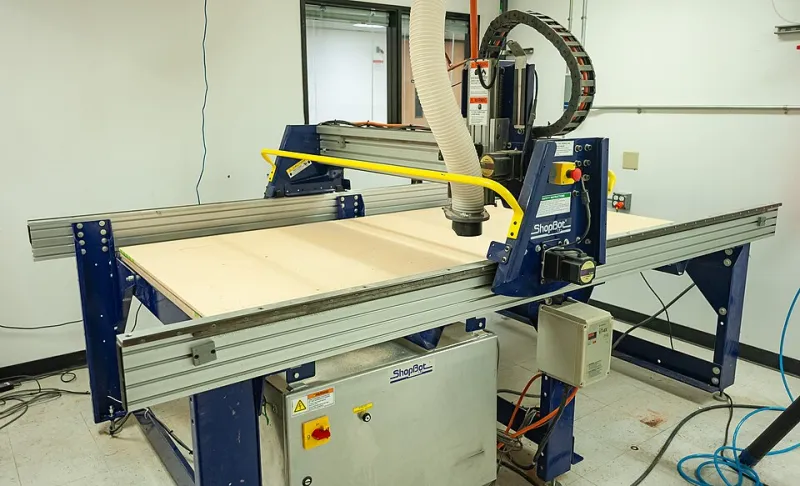
Photo: Rickwashburn1, CC BY-SA 4.0, via Wikimedia Commons
The Part You Bought Is Not Always the Part They Made
Ask a procurement specialist in the Midwest to picture their precision machining vendor, and they will describe the facility they toured: the climate-controlled inspection lab, the five-axis cells, the framed AS9100 certificate in the lobby. What they rarely picture is the modest job shop forty minutes away, running the same part number on an older Vertical Machining Center because the primary supplier's schedule overflowed in week three.
This is not an exotic scenario. Overflow subcontracting is a structural feature of the American precision machining landscape, where capacity is expensive, demand is lumpy, and quoting aggressively wins business. The problem is not that subcontracting exists — it is that it frequently happens without disclosure, without flow-down of your quality requirements, and without your knowledge until a nonconformance report arrives stamped by a company you have never heard of.
Why Overflow Happens Without a Phone Call
The economics are straightforward. A shop that wins a large order at a competitive price has effectively sold capacity it may not fully possess. Rather than lose the order or renegotiate mid-program, many suppliers quietly broker the excess to nearby shops — sometimes ones with looser process controls, older equipment, or no access to the engineering context behind the drawing.
From the buyer's side, the consequences compound quietly:
- Quality system gaps. Your supplier's AS9100 or ISO 9001 registration covers their organization. It does not automatically extend to an unapproved subcontractor two towns over.
- Traceability breaks. Material certs, heat lot numbers, and inspection records may not follow the part across the street.
- IP exposure. Your drawings, models, and process documentation now live on a stranger's servers and shop floor.
- Accountability fog. When a dimensional escape surfaces weeks later, both shops point at each other, and your root cause analysis stalls.
Detecting the Undisclosed Second Shop
Buyers are not powerless. Several signals reliably indicate that work is moving beyond the vendor you qualified:
- Inconsistent surface finishes or tool marks between lots — a hallmark of different machines, different tooling, or different hands entirely.
- Shifting paperwork. If inspection reports begin arriving on unfamiliar letterhead, or if cert formatting changes between shipments, ask why.
- Delivery patterns that defy capacity. A shop with three CNC mills that suddenly ships 4,000 parts a week is either lying about capacity or lying about who is machining.
- Refusal to host an unannounced visit. A legitimate supplier has nothing to hide on its own floor. A broker-heavy operation will steer you toward scheduled tours and prepared answers.
- First article inspection anomalies. An FAI performed on one machine does not validate parts made on another. If your FAI was done in-house but production drifted to a subcontractor, your PPAP is invalid on its face.
The Contract Language That Forces Honesty
Transparency does not emerge from goodwill; it is written into terms and conditions. Procurement teams should treat the following clauses as non-negotiable for precision work:
- A disclosure requirement: no subcontracting of any production, finishing, or inspection operation without prior written approval, with the named subcontractor and process specified.
- Flow-down of quality requirements: all AS9100/ISO 9001 clauses, drawing revisions, and special process controls extend to every subcontractor, and the prime supplier remains fully liable for their performance.
- Right of access: the buyer or its representative may audit any facility touching the part, announced or unannounced.
- Certificate of conformance ownership: the shipping supplier signs the COC regardless of who made the part, making accountability unambiguous.
- A remedy clause: undisclosed subcontracting constitutes a material breach, with re-inspection costs and lot rejection at the supplier's expense.
None of this is adversarial. Reputable shops disclose their partners willingly, and many maintain qualified subcontractor lists for plating, heat treat, and grinding that they will happily share. The shops that resist the language are telling you something worth hearing before the first purchase order, not after the first escape.
A Note From the Shop Floor
At Hongye Precision, we consider disclosed partnerships a feature of responsible capacity planning, not a confession. Every operation performed outside our facility — and every partner who performs it — is documented, approved, and flowed down before a single chip is cut. Buyers deserve to know whose hands are on their part. The best suppliers agree.
The second shift you never meet should never exist. If it does, make sure you are the one who approved it.