Where Did My Part Go Last Night? Mapping the Invisible Supply Chain Behind Your RFQ
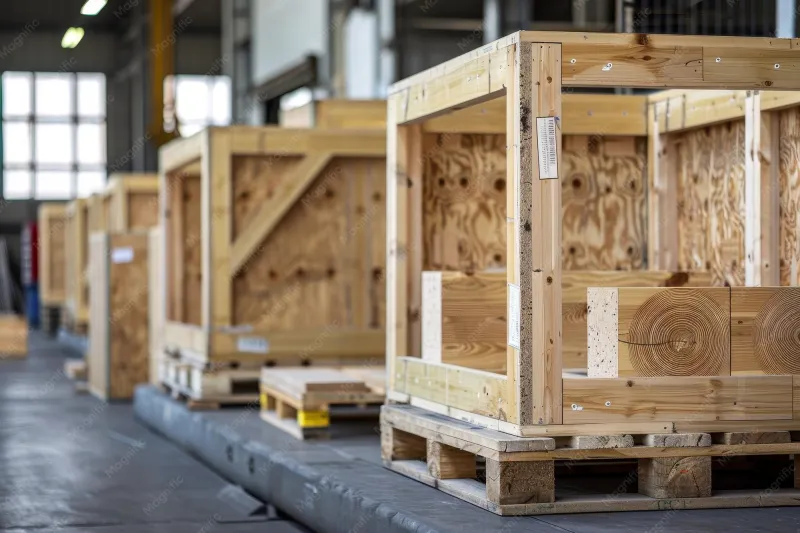
Photo: industrial factory subcontractor supply chain shipping crates warehouse, via img.freepik.com
The Shop You Hired Isn't Always the Shop That Machined It
Ask a machine shop who will produce your part and the answer is usually a confident "we will." Ask a sharper question — who performs the heat treat, the plating, the cylindrical grinding, the wire EDM? — and the answer often softens into "our trusted partners." In American precision machining, subcontracting specialty processes is standard practice and often the right call. But for procurement teams, it creates a structural blind spot: your quality system may end at the shipping dock of a vendor you cannot name.
The problem isn't that subcontracting happens. It's that it happens without your knowledge, your approval, or your audit trail.
Why the Shadow Exists
No mid-sized job shop can economically own every process. Heat treating requires furnaces and Nadcap-style process controls. Plating involves environmental compliance that most shops won't touch. Specialty grinding and EDM demand capital equipment that sits idle without steady volume. So the work flows out — frequently to vendors selected on price and proximity rather than on your specification.
The risk compounds in three ways:
- Traceability collapses. When a plating defect surfaces six months later, can anyone produce the plating vendor's process records, bath analysis logs, and certification paperwork? If your PO never named the vendor, probably not.
- Flow-down fails. Your drawing requirements bind the shop you contracted with. Unless they were formally flowed down, they bind nobody downstream.
- Liability blurs. A subcontractor's failure is legally the prime shop's problem — but recovering costs from a supplier relationship you weren't allowed to see is a slow, ugly process.
Mapping the Shadow Before You Award
Treat subcontractor disclosure as an RFQ requirement, not a courtesy. A practical mapping exercise looks like this:
- Require a subcontract list with the quote. Every outsourced process, the named vendor, and their location. Refusal to disclose is itself a data point.
- Classify each vendor by risk. A plating house handling a corrosion-critical aerospace finish deserves a different level of scrutiny than a local shop doing deburring.
- Verify certifications at the vendor level, not the prime level. An AS9100 certificate on the wall of the prime shop says nothing about the heat treater two states away.
- Ask who inspects after each outsourced operation. Incoming, in-process, and final inspection responsibility should be explicit — the most common failure mode is a part that returns from plating and ships without re-verification.
Writing Contract Language That Holds
Disclosure without enforcement is decoration. Effective purchase order terms should include:
- Named-vendor approval rights: The prime may not add, substitute, or change a subcontractor without written consent.
- Flow-down requirements: Your quality clauses, traceability standards, and certification requirements apply equally to every tier.
- Change notification: Any change in subcontractor for a listed process triggers advance notice and, for critical processes, requalification.
- Audit access: The right to audit subcontractors handling your work, directly or through the prime.
- Certificate-of-conformance accountability: The prime signs the C of C and owns every tier beneath it — in writing.
Shops with mature supplier networks will accept these terms readily; they've built their vendor base deliberately. Resistance is useful signal.
The Upside of Doing It Right
This isn't purely defensive work. A prime shop with a curated, audited, long-term subcontractor bench is a genuine asset — often better than a vertically integrated shop that treats specialty processes as an afterthought. The goal is not to eliminate the shadow supply chain. It's to drag it into the light, assign it owners, and hold it to the same standard you'd demand from the shop whose name is on your purchase order.
The parts that matter most are the ones that left the building. Know where they went.