Who Is Actually Running the Machines? Staffing Signals That Predict Your Next Late Shipment
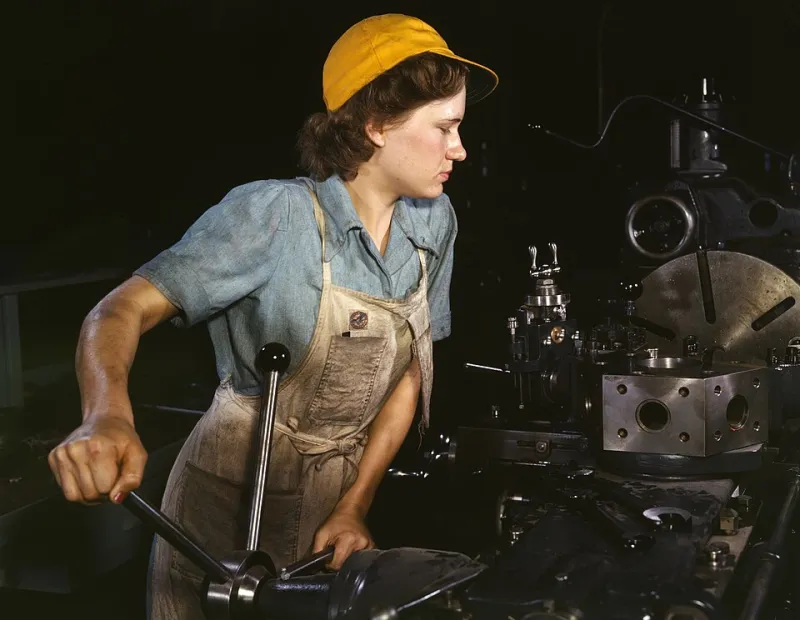
Photo: Howard R. Hollem, Public domain, via Wikimedia Commons
Every purchase order carries an implied assumption: that the shop accepting it will have hands on the machines when the calendar says it should. In the current US manufacturing labor market, that assumption deserves scrutiny.
The National Association of Manufacturers has warned for years about a persistent shortage of skilled production workers, and precision machining sits squarely in the affected zone. CNC machinists, setup specialists, and quality inspectors take years to train, and the wave of retirements from an aging workforce has outpaced the pipeline replacing them. For buyers, the consequence is subtle: a shop can own modern equipment, hold valid certifications, and quote competitive lead times — and still fail to deliver, because the bottleneck isn't steel or spindle hours. It's people.
Why Headcount Is a Capacity Number
Procurement teams are fluent in machine capacity. We ask about spindle counts, axis configurations, and material certifications. Far fewer buyers ask how many machinists are on the floor during second shift, or what percentage of the workforce is contract labor.
That omission matters. A five-axis mill is capacity only when a qualified person loads it, probes it, and inspects what comes off it. A shop running one shift with a thin bench of setups and programmers has a hard ceiling on throughput, no matter what the equipment list implies. Delivery promises made against that ceiling are optimistic at best.
Reading the Signals
The good news is that workforce strain leaves fingerprints, and most of them are publicly visible.
Job posting churn. Check the shop's careers page and its listings on major US job boards. A shop perpetually advertising the same machinist role for twelve months is telling you something: either it cannot attract talent or it cannot retain it. Neither outcome is reassuring for a customer counting on sustained output. Conversely, a shop that hires steadily and closes postings quickly demonstrates functioning recruiting — and, by extension, more reliable capacity.
Shift structure. Ask directly: how many shifts run, and how many people are on each? A single-shift operation quoting aggressive lead times is betting that everything goes right during forty hours a week. A shop running second or third shift with full crews has genuine schedule flexibility — and somewhere to put your rush order when the inevitable disruption arrives.
Reliance on temporary labor. Staffing agencies fill real gaps, but heavy dependence on contract machinists signals fragility. Temporary workers typically handle simpler, supervised work; complex setups and tight-tolerance production demand experienced hands. A useful question during supplier evaluation: what portion of your production workforce is direct-hire, and what share of setups do senior machinists personally perform?
Turnover and tenure. During a plant tour, look at the floor. A veteran crew — gray hair, worn toolboxes, obvious shorthand between setup people and programmers — suggests institutional knowledge that protects your part. Constantly unfamiliar faces suggest the opposite.
Questions Worth Asking Before You Award the Order
Formal supplier surveys rarely probe staffing depth. Add a few pointed items to your next evaluation:
- What is your current open requisition count, and how long have those roles been open?
- How many certified machinists can run the specific processes my parts require?
- What is your cross-training plan if a key setup person leaves or falls ill?
- Do you pay for apprentice training or partner with local technical colleges?
The last question carries more weight than it appears to. Shops investing in apprenticeships and community-college pipelines — a common model in the Midwest and Southeast machining clusters — are building the labor supply that protects their delivery promises over years, not quarters.
Building Staffing Risk Into Supplier Management
Staffing exposure should be a standing line item in supplier risk reviews, alongside financial health and quality metrics. For critical parts, consider:
- Annual workforce disclosure. Ask key suppliers to report headcount by shift and role as part of your vendor scorecard.
- Dual-sourcing where it counts. If a single shop holds all capacity for a high-runner part, one resignation letter can idle your line. Qualify a second source for anything your business cannot absorb missing.
- Realistic lead-time negotiation. A shop that quotes honestly against its staffing reality is a better long-term partner than one that quotes to win and expedites later — usually at your expense.
The Takeaway
Delivery performance in precision machining is fundamentally a labor story. Equipment and certifications are visible and easy to verify; workforce depth is neither, and that asymmetry is exactly where buyers get surprised. Treat staffing signals — posting churn, shift coverage, temp ratios, tenure — as leading indicators of on-time performance. The shops that manage their labor pipeline deliberately are the ones still shipping on schedule when the labor market tightens further. Your supplier evaluation process should be able to tell the difference.