One Shop, Two Shops, and the Arithmetic Nobody Runs: The Real Cost of Splitting a Precision Order

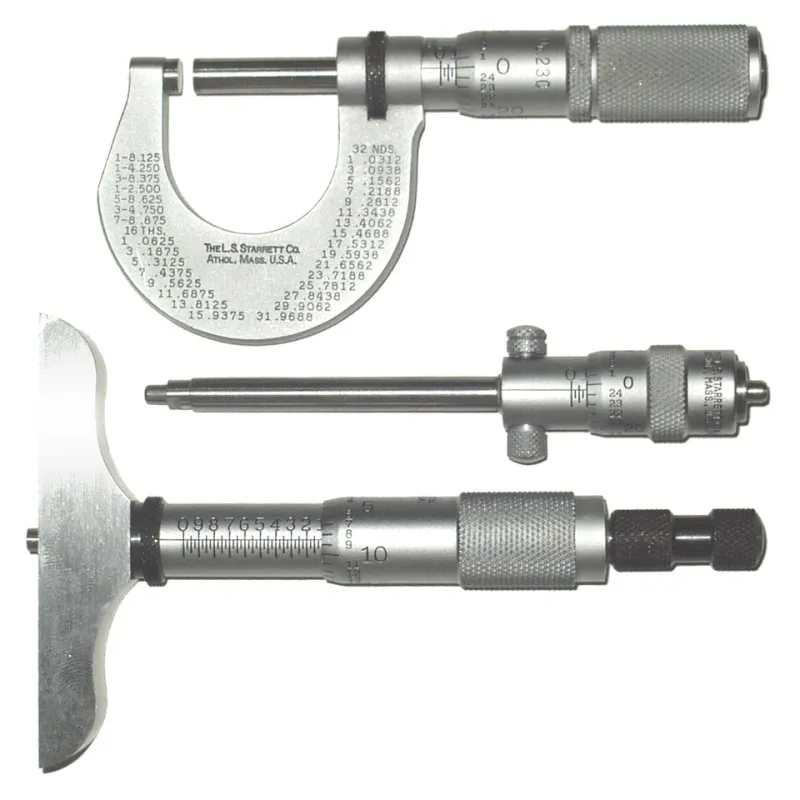
Photo: Aeroprints.com, CC BY-SA 3.0, via Wikimedia Commons
The Instinct That Feels Like Discipline
Ask a procurement manager how they de-risk a machining contract and the answer almost always involves the number two. Two vendors. Two quotes. Two sources of supply, so a fire at one facility doesn't strand a production line in Ohio or Texas. On paper, it's textbook supply chain hygiene. In precision machining, it is frequently the more expensive decision — just not in ways that show up on the purchase order.
The core issue is simple to state and easy to overlook: a machined part is not defined by its drawing alone. It is defined by the process plan behind it — the workholding, the toolpath strategy, the sequence of operations, the inspection points. Change the shop, and you change the process plan. Change the process plan, and you are no longer buying the same part from two sources. You are buying two related-but-different parts that happen to share a print number.
Where the Divergence Begins
Consider a bracket with a tight positional tolerance between two bores and a thin-wall section prone to distortion. Shop A machines the part in a single setup on a five-axis mill, holding everything in one datum structure. Shop B, running a different machine mix, splits the work across two operations with a secondary fixture. Both shops can hold the tolerance on a good day. But their scrap rates, their sensitivity to incoming material variation, and their response to an engineering change will differ in ways nobody predicted at quote time.
Now multiply that across a dual-sourced order and the hidden costs start stacking up:
- Duplicated fixturing and NRE. Each vendor engineers their own fixtures, probes, and first-article setup. You pay for that engineering twice, often buried in piece-price or setup charges.
- Divergent inspection data. Two CMM programs, two measurement routines, potentially two different interpretations of a GD&T callout. When your customer audits you, reconciling two inspection methodologies is your problem, not theirs.
- Out-of-sync engineering changes. A revision released to one vendor but not fully absorbed by the other is the classic pathway to mixed inventory — the kind of defect that surfaces at your customer's facility, eighteen months later.
- Split learning curves. Every machinist learns a part on the first hundred pieces. Split the order and neither vendor ever gets fully down their curve, so neither ever gives you their best price or their best process.
The Volume Question
Dual-sourcing makes the most sense when the part is simple, the tolerance envelope is forgiving, and volume is high enough that both vendors operate deep in their efficiency zone. A turned shaft with modest tolerances is a commodity; two qualified sources compete on price and keep each other honest.
It makes the least sense when the part is complex, tolerances are tight, and volumes are moderate — precisely the profile of most genuine precision machining work. In that regime, the second vendor isn't a hedge. It's a second experiment running at your expense.
A Framework for the Decision
Before splitting an order, run it through four questions:
- Is the part process-plan-sensitive? If two qualified shops would plausibly build it differently — thin walls, datums that fight each other, critical surface finishes — the answer is yes, and divergence risk is real.
- Could either vendor absorb 100% of demand in an emergency? If not, the second source provides less insurance than it appears to. A source that can only handle 40% of volume during a disruption is a partial hedge at full administrative cost.
- Who owns inspection methodology? If you cannot mandate a single measurement approach across both vendors, you will own the reconciliation burden.
- What is the change-management overhead? Every revision, deviation, and supplier corrective action now has a factor-of-two multiplier.
If three or more answers point toward complexity, a single deeply qualified shop — one with the capacity reserved, the process documented, and the engineering relationship established — will typically outperform two shallow relationships on total cost of ownership.
The Stronger Position
The alternative to dual-sourcing isn't blind dependence on one vendor. It's deep qualification of one: audited processes, documented fixtures, financial transparency, and a contractual capacity reservation. That arrangement delivers most of the risk mitigation dual-sourcing promises, without the process divergence that dual-sourcing guarantees.
Leverage in precision procurement doesn't come from having two purchase orders. It comes from having one vendor whose process you understand so well that switching away from them would be their nightmare, not yours. That's a position you build — not split.