The Chamfer That Cost Sixty Grand: Where Uncontrolled Engineering Changes Go to Hide
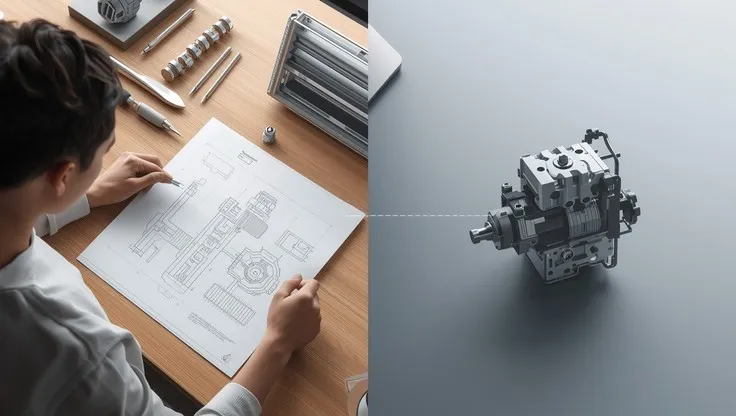
Photo: engineering blueprint revision documents on desk next to precision machined metal parts in machine shop office, via images.stockcake.com
The Email That Overrode the Contract
Somewhere between the purchase order and the first article inspection, a process engineer sends a two-line email: "Can we add a 0.010" chamfer on that bore before you run? Minor thing." The machine shop, wanting to be helpful, agrees. Nobody issues a revised drawing. Nobody adjusts the quote. Nobody tells the quality department.
Three weeks later, the parts arrive with a chamfer the CMM program doesn't expect, the inspection report fails, and the delivery date slips while everyone argues about whose fault it is. The contract says one thing; the floor is doing another. This is the silent engineering change order — the most common and least documented failure mode in precision machining procurement.
Why Informal Changes Are Never as Small as They Sound
A machinist once put it plainly on a shop floor in Ohio: "There's no such thing as a minor drawing change. There are only minor-looking ones."
The reason is arithmetic. A chamfer on a bore may require a different tool, a second setup, or an interrupted cut that halves tool life. On a medical device housing in 17-4 stainless, it may trigger a re-validation of the cleaning process. On a titanium aerospace bracket, it can shift the stress riser enough to require new FAI documentation under AS9102. What engineering framed as a five-minute favor becomes a cascade of cost, schedule, and compliance consequences — none of it captured in writing.
The financial exposure compounds in three directions at once:
- Pricing voids. The original quote was built on a specific revision. Change the geometry, and the unit price, tooling amortization, and setup charges are all back on the table.
- Quality agreement gaps. Inspection plans, PPAP packages, and CMM programs reference a revision level. An uncontrolled change creates parts that are physically different but formally identical — the worst possible audit finding.
- Delivery collapse. Shops sequence work by promised geometry. A mid-stream change can push a job behind a dozen others, and the customer has no contractual footing to complain, because on paper nothing changed.
The Four Ways Changes Sneak In
In our experience reviewing disputed machining contracts, informal changes arrive through a predictable set of doors:
- Verbal approvals during shop visits or calls. Well-intentioned, instantly forgotten, impossible to reconstruct.
- Email threads outside the document system. The "official" revision lives in the PLM system; the real geometry lives in a reply-all chain.
- Stale PDFs. A buyer forwards Rev B to a new vendor while engineering is already on Rev D. The shop quotes — and machines — the wrong part, correctly.
- Supplier-initiated "improvements." A shop substitutes a material or adjusts a process without written concurrence, assuming the customer will welcome the savings. Sometimes they don't.
Each of these has the same root cause: no single, enforced channel through which a change becomes real.
A Change-Control Protocol You Can Demand
Procurement teams do not need to become document-control specialists. They need to write a handful of requirements into the RFQ and the purchase order, and hold both internal engineering and the supplier to them.
1. Name a revision authority. Every order lists one person — with a named backup — authorized to approve changes on the buyer's side. If the shop receives a change request from anyone else, the correct response is a polite refusal and a forwarded email.
2. Require a written change acknowledgment within 24 hours. The supplier confirms, in writing, the revision level received, the impact on price, and the impact on delivery. No acknowledgment, no change. This single rule eliminates most verbal-change disputes.
3. Tie payment to revision control. Invoices reference the drawing revision machined. FAI reports, material certs, and inspection data cite the same level. If the paperwork and the PO don't match, payment is held — automatically, not punitively.
4. Formalize the "no cost, no schedule" test. Small changes happen; that's engineering. But every change, however trivial, gets a written statement of cost and schedule impact before it's executed. If the shop says "no impact," that statement is on file. If the impact is real, it's negotiated while options still exist.
5. Close the loop with a revised PO. A change isn't effective until a amended purchase order or ECO number exists. This is the artifact that protects both parties when memories diverge eighteen months later during a warranty claim or an audit.
What a Good Machine Shop Does Differently
The burden is not solely on the buyer. Capable precision machining partners enforce change control on their own behalf, because uncontrolled changes hurt them most. Look for these signals during supplier qualification:
- A documented practice of quoting against a specific revision, with the revision number printed on the quote, the router, and the inspection report.
- A written change-request form — even a simple one — that captures the requester, the description, and the cost/schedule impact before work proceeds.
- Job travelers that stop the job when a revision mismatch is detected, rather than a machinist quietly interpreting which drawing is "current."
- A sales or engineering contact who pushes back on informal requests in writing, not because they're difficult, but because the process protects both sides.
A shop that accepts every request with a smile and no paperwork is not flexible. It is accumulating liability — yours and its own.
The Culture Problem Behind the Paperwork Problem
Change control fails for a human reason before it fails for a procedural one: engineers are rewarded for responsiveness, not for documentation. "Just add the chamfer" feels like service. Requiring an ECO feels like bureaucracy.
The reframing that works with internal stakeholders is simple: an unapproved change is not a favor to the program — it's an unpriced liability sitting on someone else's balance sheet. The sixty-thousand-dollar chamfer is not a hypothetical. It happens, in some form, on programs across the country every quarter, and it is almost always traceable to a message nobody treated as a contract modification.
Bottom Line for Buyers
Before your next precision machining order goes out the door, audit your own side first. Confirm that the revision on the RFQ is the revision in your PLM system. Confirm that one named person can approve changes. Confirm that your supplier is required to acknowledge, price, and document every deviation — including the ones that arrive from your own building.
The drawing revision nobody signed off on is the cheapest problem to prevent and the most expensive one to discover. Put the protocol in writing before the first chip is cut, and the only surprises left will be the ones on the good-news side of the ledger.